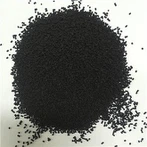
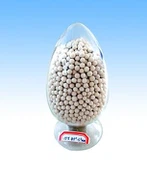
Molecular sieve is a synthetic hydrated aluminosilicate (zeolite) or natural zeolite that has the function of screening molecules. It is mainly used in organic chemical industry and petrochemical industry. It is also an excellent adsorbent for gas dehydration and purifies pollutants in the air.
Molecular sieves according to different pore diameters have models: 3A (potassium A type), 4A (sodium A type), 5A (calcium A type), 10Z (calcium Z type), 13Z (sodium Z type), Y (sodium Y type), Sodium mordenite type and so on. The most basic structure of the molecular sieve framework is SiO4 and AlO4 tetrahedrons, and the crystals of the three-dimensional network structure are composed of ordinary oxygen atoms. This combination forms voids and channels with molecular level and uniform pore size.
Molecular sieve has high adsorption capacity, strong selectivity and high temperature resistance. It is widely used in organic chemical industry and petrochemical industry, and is also an excellent adsorbent for gas dehydration. Increasing attention has also been paid to exhaust gas purification.

Carbon Molecular Sieves Ultra High Pressure:
Product description
The noteworthy feature of Carbon Molecular Sieves Ultra High Pressure: Low purity nitrogen with a high rate of gas production. This is widely used in coal mines, oilfields, petroleum, and natural gas storage and transportation.
Extended information
Molecular Sieve Classification
According to the properties of molecular sieve catalysts, it can be divided into acidic catalysts, bifunctional catalysts and shape selective catalysts. The acid catalyst utilizes the surface acidity of the molecular sieve to catalyze the reaction. The bifunctional catalyst can support platinum and palladium, and a bifunctional molecular sieve catalyst with metal catalysis and acid catalysis can be obtained.
For shape selection catalysts, since the catalysis of molecular sieve generally occurs in the intracrystalline space, the size and pore structure of molecular sieve have a great influence on catalytic activity and selectivity. The molecular sieve has regular and uniform intracrystalline channels, and the pore size is close to the molecular weight.