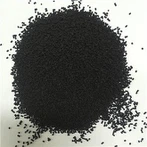
For those who have just come into contact with molecular sieves, it is the most basic thing to understand the difference between 3A, 4A, 5A, and 13X molecular sieves. I will start our molecular sieve learning journey with this question first~
The long road is long, and its repairs are far away.
1. The chemical formula of 3a 4a 5a molecular sieve
3A molecular sieve chemical formula: 2/3K₂O1₃·Na₂₂O·Al₂O₃·2SiO₂.·4.5H₂O
4A molecular sieve chemical formula: Na₂O·Al₂O₃·2SiO₂·4.5H₂O
5A molecular sieve chemical formula: 3/4CaO1/4Na₂OAl₂O₃·2SiO₂·4.5H₂O
2. The pore size of 3a 4a 5a molecular sieve
The working principle of molecular sieves is mainly related to the pore size of molecular sieves, which are 0.3nm/0.4nm/0.5nm respectively. They can adsorb gas molecules whose molecular diameter is smaller than the pore size. The larger the size of the pore size, the greater the adsorption capacity. The pore size is different, and the things that are filtered and separated are also different. In simple terms, 3a molecular sieve can only adsorb molecules below 0.3nm, 4a molecular sieve, the adsorbed molecules must also be less than 0.4nm, and 5a molecular sieve is the same. When used as a desiccant, a molecular sieve can absorb up to 22% of its own weight in moisture.
3. 3a 4a 5a molecular sieve application industry
3A molecular sieve is mainly used for drying petroleum cracking gas, olefin, refinery gas, and oilfield gas, as well as a desiccant in chemical, pharmaceutical, insulating glass, and other industries. Mainly used for drying of liquids (such as ethanol), air drying of insulating glass, nitrogen and hydrogen mixed gas drying, refrigerant drying, etc.
4A molecular sieves are mainly used for drying natural gas and various chemical gases and liquids, refrigerants, pharmaceuticals, electronic data, and volatile substances, purifying argon and separating methane, ethane, and propane. Mainly used for the deep drying of gases and liquids such as air, natural gas, hydrocarbons, refrigerants; preparation and purification of argon; static drying of electronic components and perishable materials; dehydrating agent in paints, polyesters, dyes, and coatings.
5A molecular sieve is mainly used for natural gas drying, desulfurization, and carbon dioxide removal; separation of nitrogen and oxygen to prepare oxygen, nitrogen, and hydrogen; petroleum dewaxing to separate normal hydrocarbons from branched hydrocarbons and cyclic hydrocarbons.
However, the large specific surface area and polar adsorption of renewable 5A molecular sieves can achieve deep adsorption of water and residual ammonia. The decomposed nitrogen-hydrogen mixture enters a dryer to remove residual moisture and other impurities. The purification device adopts double adsorption towers, one absorbs dry ammonia decomposition gas, and the other desorbs moisture and residual ammonia in a heated state (generally 300-350) to achieve the purpose of regeneration.
13X type molecular sieve, also known as sodium X type molecular sieve, is an alkali metal aluminosilicate, which has certain basicity and belongs to a class of solid bases. 3.64A is less than 10A any molecule
13x is mainly used in:
1) Gas purification in the air separation unit to remove water and carbon dioxide.
2) Drying and desulfurization of natural gas, liquefied petroleum gas, and liquid hydrocarbons.
3) General gas deep drying.